Kicking off with Investment asset management strategies, this opening paragraph is designed to captivate and engage the readers, setting the tone casual formal language style that unfolds with each word.
When it comes to managing investments, having effective asset management strategies is crucial. This article delves into the concept, importance, and types of strategies that can lead to successful investment outcomes.
Investment Asset Management Strategies
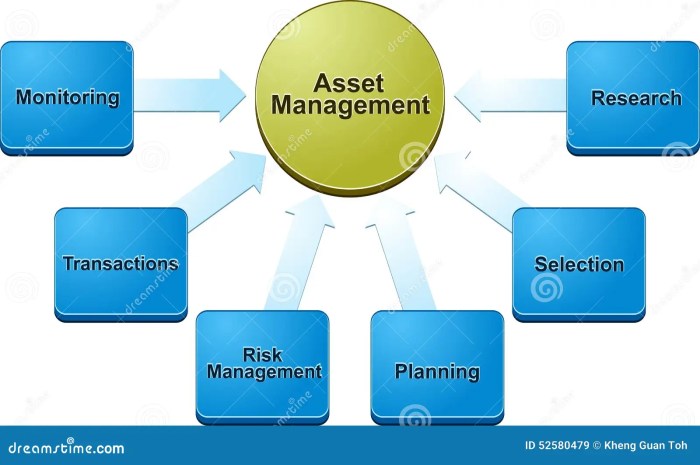
Investment asset management involves the strategic management of assets to achieve specific financial goals and objectives. This includes selecting, monitoring, and optimizing investments to maximize returns while managing risks.
Having effective asset management strategies in investments is crucial for investors to make informed decisions, mitigate risks, and achieve long-term financial success. By implementing sound asset management strategies, investors can diversify their portfolios, enhance performance, and adapt to changing market conditions.
Types of Investment Asset Management Strategies
- Passive Management: Involves investing in a diversified portfolio to mirror a market index, with the aim of achieving average market returns at lower costs.
- Active Management: Involves actively buying and selling assets to outperform the market, based on market analysis, research, and forecasting.
- Value Investing: Focuses on identifying undervalued assets with the potential for long-term growth and capital appreciation.
- Growth Investing: Seeks out assets with strong growth potential, typically in emerging industries or companies with high growth prospects.
Examples of Successful Implementation of Asset Management Strategies
One notable example of successful asset management strategies is Warren Buffett’s value investing approach. Buffett, known as one of the most successful investors, has consistently applied a value-oriented strategy to select undervalued assets with strong fundamentals, leading to significant wealth accumulation over the years.
Another example is the passive management strategy employed by many investors through index funds or exchange-traded funds (ETFs). By diversifying investments across a broad market index, investors can achieve market returns with lower fees and reduced risk compared to actively managed funds.
Asset Management
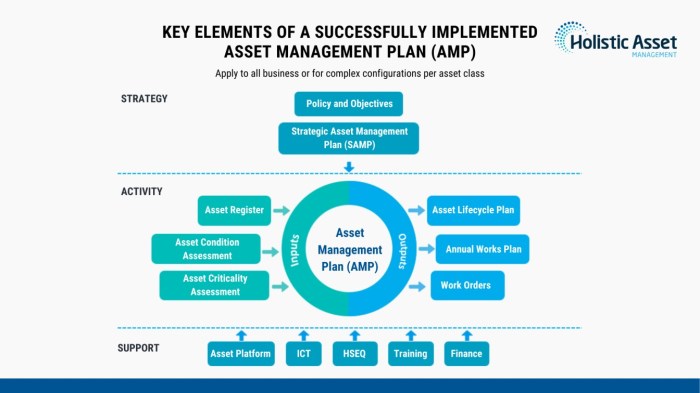
Asset management in the context of investments refers to the professional management of various types of assets such as stocks, bonds, real estate, and commodities to achieve specific investment objectives.Asset management plays a crucial role in maximizing investment returns by strategically allocating and monitoring investments, taking into account factors like risk tolerance, time horizon, and financial goals. By actively managing assets, investment managers aim to generate higher returns compared to passive investment strategies.Effective asset management helps in diversifying investment portfolios by spreading investments across different asset classes, industries, and regions.
This diversification reduces the overall risk of the portfolio and helps in capturing opportunities for growth in various market conditions.Key principles of effective asset management include conducting thorough research and analysis, setting clear investment objectives, regularly monitoring and adjusting the portfolio, maintaining a long-term perspective, and staying disciplined in following the investment strategy.
Asset Allocation
Asset allocation is the process of dividing an investment portfolio among different asset classes such as stocks, bonds, real estate, and cash equivalents. It is a crucial component of investment strategy as it helps investors achieve their financial goals while managing risk effectively.
Different Approaches to Asset Allocation
- Strategic Asset Allocation: This approach involves setting a target mix of assets based on long-term financial goals and risk tolerance.
- Tactical Asset Allocation: This approach involves making short-term adjustments to the asset mix based on market conditions and economic outlook.
- Dynamic Asset Allocation: This approach involves actively adjusting the asset mix in response to changing market conditions and investment opportunities.
How Asset Allocation Impacts Risk Management in Investments
Asset allocation plays a key role in risk management by diversifying investments across different asset classes. By spreading investments across a mix of assets, investors can reduce the impact of market volatility on their portfolios. Additionally, asset allocation helps investors avoid overexposure to any single asset class, which can help mitigate risks associated with specific market fluctuations.
Examples of Successful Asset Allocation Strategies in Different Market Conditions
- In a bull market, a growth-oriented asset allocation strategy focusing on equities may yield high returns.
- In a bear market, a defensive asset allocation strategy emphasizing fixed-income securities and cash equivalents may help preserve capital.
- During periods of economic uncertainty, a balanced asset allocation strategy combining equities, bonds, and alternative investments can help manage risks while seeking growth opportunities.
In conclusion, mastering investment asset management strategies is key to navigating the complexities of the financial market and achieving substantial returns. By understanding the principles and examples discussed, investors can enhance their portfolio management skills and make informed decisions for optimal results.
FAQ Resource
What are the key principles of effective asset management strategies?
Effective asset management strategies involve thorough research, diversification, risk management, and regular monitoring of investments.
How does asset allocation impact risk management in investments?
Asset allocation plays a crucial role in risk management by spreading investments across different asset classes to reduce vulnerability to market fluctuations.
Can you provide examples of successful asset allocation strategies in different market conditions?
During economic downturns, a conservative asset allocation strategy with a higher percentage of bonds may be more suitable, while in bullish markets, a growth-oriented strategy with more equities could be advantageous.


