
Delving into the realms of Asset management vs. wealth management, this exploration unravels the distinct facets of managing assets and wealth, offering a comprehensive insight into financial planning and investment strategies.
Exploring the nuances of asset management and wealth management, this discussion sheds light on the crucial roles they play in securing financial stability and growth.
Asset Management
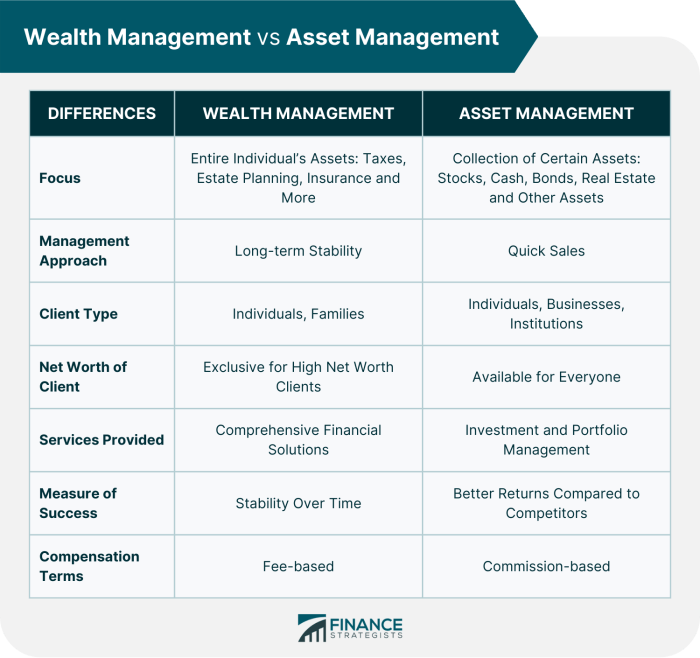
Asset management involves the management of a client’s investments and assets to achieve specific financial goals. This process includes monitoring the performance of assets, making adjustments as needed, and providing recommendations to optimize the portfolio.
Types of Assets
- Equities: Stocks representing ownership in a company.
- Bonds: Fixed-income securities issued by governments or corporations.
- Real Estate: Physical properties or investment in real estate funds.
- Commodities: Raw materials such as gold, oil, or agricultural products.
- Cash Equivalents: Short-term, low-risk investments like money market funds.
Asset management plays a crucial role in financial planning by ensuring that investments are diversified, risk is managed effectively, and returns are maximized. By carefully selecting and monitoring assets, individuals and institutions can work towards achieving their long-term financial objectives.
Wealth Management
Wealth management is a comprehensive approach to managing an individual’s or organization’s financial affairs, focusing on more than just investment management. It involves a combination of financial planning, investment management, tax planning, estate planning, and other personalized services tailored to meet the specific needs and goals of the client.
Goals of Wealth Management
The primary goal of wealth management is to help clients grow and protect their wealth over the long term. This includes maximizing investment returns, minimizing tax liabilities, planning for retirement, preserving assets for future generations, and achieving financial security and independence.
Role of a Wealth Manager
- A wealth manager acts as a trusted advisor who works closely with clients to understand their financial goals, risk tolerance, and unique circumstances.
- They develop a personalized wealth management plan that integrates various financial services to help clients achieve their objectives.
- Wealth managers monitor and adjust the investment portfolio, asset allocation, and financial strategies as needed to ensure that the client’s financial goals are on track.
- They provide ongoing guidance and support, helping clients navigate complex financial decisions and unforeseen events that may impact their wealth.
Asset Allocation
Asset allocation is the process of dividing an investment portfolio among different asset classes such as stocks, bonds, and cash equivalents. It is a crucial component of an investor’s overall strategy as it helps to manage risk and maximize returns based on individual financial goals and risk tolerance.
Types of Asset Classes:
- Stocks: Represent ownership in a company and offer potential for high returns but come with higher volatility.
- Bonds: Debt securities issued by governments or corporations that provide income and stability to a portfolio.
- Real Estate: Includes properties or real estate investment trusts (REITs) that offer diversification and potential for income and capital appreciation.
- Cash Equivalents: Low-risk assets like money market funds or certificates of deposit that provide liquidity and stability.
Factors to Consider in Asset Allocation:
- Risk Tolerance: An individual’s ability and willingness to withstand fluctuations in the value of their investments.
- Time Horizon: The length of time an investor plans to hold their investments before needing to access funds.
- Financial Goals: Objectives such as retirement planning, wealth accumulation, or funding education that influence the choice of asset allocation.
- Market Conditions: The current economic environment and market outlook that may impact the performance of different asset classes.
In conclusion, the juxtaposition of asset management and wealth management highlights the intricate balance between managing assets for financial goals and optimizing wealth for long-term prosperity.
FAQ Section
What is the main difference between asset management and wealth management?
Asset management focuses on managing specific assets for financial goals, while wealth management involves a holistic approach to managing overall wealth and financial well-being.
How does asset allocation play a role in both asset management and wealth management?
Asset allocation is crucial in both disciplines as it involves distributing investments across various asset classes based on risk tolerance and financial objectives to achieve optimal returns.
What are the key goals of wealth management for individuals or organizations?
The primary goals of wealth management include wealth preservation, growth, and efficient wealth transfer to future generations.


